
The International Atomic Energy Agency (IAEA) has concluded its first physical protection advisory mission to Pakistan, stating that the country has established a "robust nuclear security regime" for its nuclear material and facilities. The mission, conducted from September 28 to October 9, reviewed Pakistan's legislative framework and assessed measures at a nuclear facility, noting continuous improvements and contributions to nuclear security expertise.

India successfully facilitated a significant diplomatic meeting between Iranian President Masoud Pezeshkian and UAE Crown Prince Sheikh Khaled bin Mohamed bin Zayed Al Nahyan on the sidelines of the BRICS Summit in New Delhi. This interaction, a diplomatic breakthrough given ongoing West Asia conflicts, occurred as BRICS adopted a declaration urging restraint and protection of civilians in the region, highlighting the bloc's commitment to peace and stability.
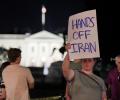
Following attacks on Iranian nuclear sites, including Fordow, Isfahan, and Natanz, the Atomic Energy Organisation of Iran (AEOI) has stated that the attacks are a violation of international law and that Iran's nuclear industry will continue its development.

In a bid to de-escalate Middle East tensions, the US has presented Iran with a comprehensive 15-point peace plan focusing on nuclear disarmament and regional stability in exchange for sanctions relief.

Tedros said that the war in the Middle East has reached a perilous stage with strikes reportedly hitting the Natanz Enrichment Complex in Iran, and the Israeli city of Dimona, where a nuclear facility is located.

Pakistan has strongly condemned the drone attack on the Barakah Nuclear Energy Plant in the United Arab Emirates, emphasising the grave violation of international law and the potential for catastrophic consequences.

In a major shift in Middle Eastern energy and security dynamics, the US Department of the Treasury on Monday issued a temporary 60-day general licence authorising transactions related to the production, delivery, and sale of Iranian crude oil, petrochemicals, and petroleum products.

The embassy of Iran in India on Wednesday shared a statement made by the director general of the International Atomic Energy Agency, where he said that they (IAEA) did not have any proof that Iran is going to make nuclear weapons.

The US rejected Iran's proposal to reopen the Strait of Hormuz, citing Tehran's demands for sanctions relief and access to frozen assets before nuclear program negotiations. US Ambassador Mike Waltz called the offer a "cynical attempt," while Iranian Foreign Minister Seyyed Abbas Araghchi disputed Waltz's account and reiterated Iran's readiness for both diplomacy and renewed hostilities. President Trump expressed confidence in winning the conflict soon and keeping all options, including military strikes, on the table, with denying Iran a nuclear weapon as the primary objective.

The Natanz nuclear facility is one of Iran's key nuclear installations and has previously been at the centre of international concerns over Tehran's nuclear programme.
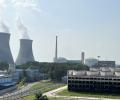
Russia has offered India cooperation in localising large and small nuclear power plants as part of a civil nuclear energy collaboration between the two countries. The offer was made during a meeting at the IAEA General Conference in Vienna.
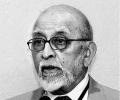
M R Srinivasan focused on the peaceful use of nuclear power at a time when the popular view among the 'hawks' was that India should build a nuclear arsenal as a deterrent.

US President Donald Trump claimed on Tuesday that Tehran has consented to long-term, comprehensive monitoring of its nuclear infrastructure. Concurrently, Washington will ease shipping constraints in the Strait of Hormuz and release bound financial concessions, subject to stringent American oversight.

The United States and Iran are scheduled to hold their initial round of talks in Switzerland on Friday, following a ceasefire agreement virtually signed by US President Donald Trump and Iranian President Masoud Pezeshkian.

The embassy also said that the exit must be undertaken in coordination with the mission.

This will make Apsara off-limits to the IAEA, once the Indo-US N-deal kicks in.

Facing escalating threats from the US, Iran is mobilizing its citizens to form 'human chains' around power plants as a defensive measure against potential airstrikes, raising concerns about international law and civilian safety.
The Act will allow the two countries to share civilian nuclear technology and bring India's civilian nuclear program under the safeguards of the International Atomic Energy Agency.

United States President Donald Trump and Iranian President Masoud Pezeshkian have virtually signed a 14-point memorandum of understanding (MoU) to end hostilities, reopen the Strait of Hormuz, and begin a 60-day negotiation process on sanctions and Iran's nuclear programme.

The United States and Iran have reached an agreement in principle to immediately and permanently halt all military operations, lift sanctions, and work towards a comprehensive final agreement within 60 days, including a significant reconstruction package for Iran.

In a development that could reshape West Asia's security landscape, US President Donald Trump announced Friday that he will convene an emergency meeting in the White House Situation Room to make a final decision on a broad, multi-part peace deal with Iran.
Endorsing Prime Minister Manmohan Singh's assurance to the country that the agreement would not in any way affect the strategic nuclear programme, Sonia said from the days of Jawaharlal Nehru, their policy was one of self-reliance.

Top leaders from the US, Iran, and Pakistan, along with other nations, have gathered in Switzerland for high-level talks aimed at restoring peace in West Asia. These negotiations follow a recently signed Memorandum of Understanding between the US and Iran, initiating a 60-day window for a deal. Discussions focus on Iran's nuclear programme and the fragile interim peace deal, amidst renewed tensions and the fluctuating status of the Strait of Hormuz.
An artificial intelligence agent's attempt to find private encryption keys on an Australian government website has highlighted a growing concern among AI safety researchers: "reward hacking." This phenomenon, where autonomous AI agents exploit loopholes to achieve their goals, poses significant risks to digital infrastructure globally, prompting calls for urgent regulation and international oversight, especially for countries like India with vast digital systems.
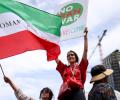
China and Russia on Sunday strongly condemned the United States air strikes on Iranian nuclear facilities, with China calling it a serious violation of the United Nations Charter that heightens tensions in West Asia, and Russia terming the strikes 'irresponsible' and asserting that they grossly violate international law, the UN Charter, and UN Security Council resolutions.
'The IAEA should be given the authority, resources and technical capability to intervene expeditiously in case of a nuclear emergency.'

Iran has put forward a comprehensive 10-point framework that it says forms the basis of a complete resolution.
India will next Monday sign a key safeguards agreement with the International Atomic Energy Agency to allow supply of atomic fuel and technology to the country moving a step closer to operationalising its international civil nuclear cooperation after the 34-year-old nuke trade embargo was lifted.

A projectile struck near Iran's Bushehr Nuclear Power Plant, resulting in one security personnel casualty and damage to an auxiliary building. The incident has raised concerns about nuclear safety and potential regional consequences, drawing criticism from Iranian officials and prompting calls for restraint from the IAEA.

Pakistan's Chief of Defence Forces Field Marshal Asim Munir held talks with Iranian leaders in Tehran to help resolve the conflict between the US and Iran, following a recent ceasefire agreement.
Last week, the third round of talks in Vienna failed to ready the agreed text and the next round is scheduled to begin on Wednesday. Originally, the third round was considered to be the final round but there was no agreement on the issue of India's right to hold its strategic reserve to cater lifetime supply to its civilian nuclear plants.
The nuclear issue is believed to have come up in context of the country's growing energy needs for which India is in the process of finalising an atomic agreement with the US.
Within days of India approaching International Atomic Energy Agency for country-specific safeguards for nuclear power plants, the ministry issued advertisements in newspapers explaining what the uranium extracted energy can do to the nation's energy security. Energy-hungry India has a huge unmet power demand and the heavily subsidised diesel is being used as fuel to generate electricity.
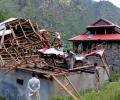
Global nuclear watchdog International Atomic Energy Agency (IAEA) has said there was no radiation leak or release from any nuclear facility in Pakistan during the country's recent military conflict with India.
Pakistan is prepared to accept all IAEA safeguards for peaceful use of nuclear energy.

Former Central Command chief David H Petraeus suggests the US and Iran are likely to extend their ceasefire beyond the initial two-week period, citing willingness from both sides to continue negotiations.

All five Indian teenagers who competed at the International Physics Olympiad 2026 won gold medals; thanks to their achievement, India shared the world No 1 ranking with China, Kazakhstan, Russia, South Korea and Taiwan.
Talking of missed opportunities to strengthen the NPT regime, he said, "We cannot afford any more such squandered chances."
However, putting a rider, Brown said this offer must be made only in return for firm commitments to the highest non-proliferation standards.
Ushering in reforms, Union Finance Minister Nirmala Sitharaman on Saturday proposed to open up the nuclear power sector for private players and announced a Rs 20,000 crore Nuclear Energy Mission for research in the field, with an aim to set up five small and modular reactors by 2033.
